Trondheim
From bakeries and breweries to fine dining: reserve special menus early, but explore the market hall and lunchtime options too.
Chapter 05 · Food & Drink
Skrei, stockfish, king crab, reindeer and cloudberries tell of seasons, climate and long distances.
Season before menu
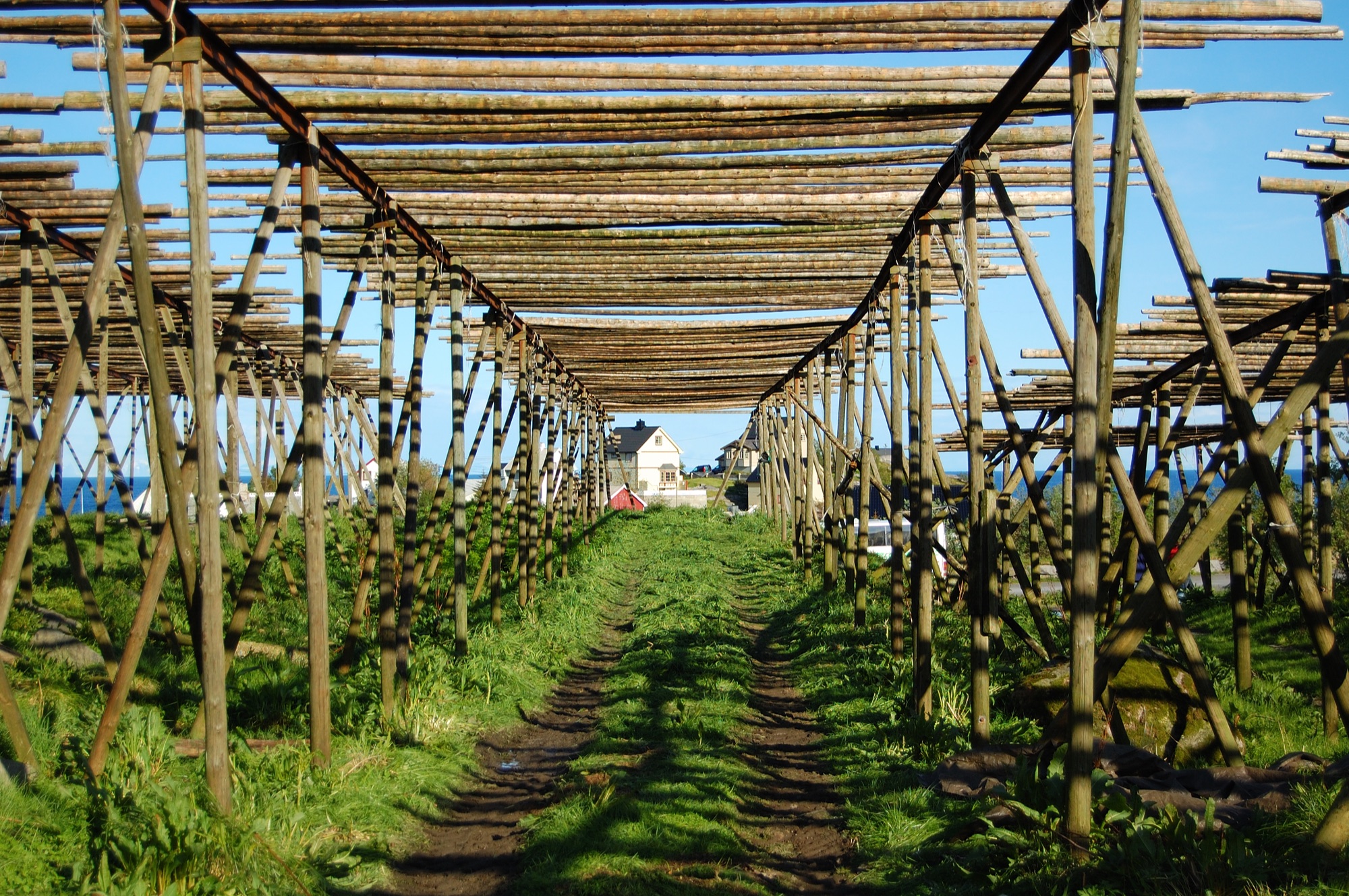
In Northern Norway, origins are visible: fish hangs on racks, boats lie beside restaurants and farm shops sell local cheese, meat and berry products.
Skrei, polar night and warming stews
Dried fish and the first herbs
Fresh catches, berries and long evenings
Lamb, game, mushrooms and harvests
Trøndelag
Trondheim and Trøndelag combine productive farming, coastal fishing and an ambitious restaurant scene. The region held the European Region of Gastronomy title in 2022.
From bakeries and breweries to fine dining: reserve special menus early, but explore the market hall and lunchtime options too.
Farm shops, cheesemakers and small producers line the Golden Road.
Crabs, mussels and fish travel only a short distance from sea to plate here.
Fish & coast
Three names, three products: skrei is migrating Arctic cod, stockfish is air-dried without salt, while klippfisk is salted and dried.
Skrei reaches the coast between January and April. Stockfish from Lofoten has protected geographical status.
Salted dried fish shaped the city's trade and cooking; bacalao connects Norway with southern Europe.
Small coastal towns often serve whatever is available. Ask about the local catch.
Arctic cuisine
Troms and Finnmark
King crab, reindeer, Arctic char and cloudberries are not exotic decorations but products of a landscape with short summers and long winters.
King crab appears on many menus in Kirkenes and around the Varangerfjord. Tromsø combines Arctic ingredients with modern city cooking. Inland, reindeer and game shape the menus.
Sweet meat from the Barents Sea
Lean, intensely flavoured and often slow-cooked
Delicate fish from cold waters
Golden berries for desserts and preserves
Tromsø's brewing tradition
Halibut from the Northern Norwegian coast
Sámi food
Depending on the region, traditional foods draw on reindeer, fish, berries and herbs. Look for experiences led and explained by Sámi people themselves.
Bidos is a reindeer stew, gáhkku a flatbread. Preparation and significance vary between families and regions.
A meal with local hosts reveals more than an anonymous “Arctic platter”. Ask respectfully about the origins and stories of the ingredients.
More about Arctic foodCafés & huts
A Norwegian waffle with brunost or sour cream is a break, a reward and a reliable option for a rainy day.
Check whether a DNT hut is staffed, self-service or unstaffed.
Ferry cafés are convenient, but not always open. Carrying your own picnic remains sensible.
Bakeries and museum cafés often close earlier than in Germany.
Shop well
Coop, Kiwi, Rema 1000 and Extra cover everyday needs; smaller towns have a more limited selection.
Cheese, sausages, bread and berry products direct from the region.
Ask about the catch, preparation and a suitable quantity.
Many shops are closed; small Sunday shops have a limited range.
A flask, bread, spreads and fruit save time on long stages.
On camping trips, take refrigeration and the freshness of fish products seriously.
Alcohol
Plan ahead, enjoy thoughtfully
Higher-strength drinks are sold through the state-run Vinmonopolet. Sales hours are limited, and shops close on Sundays and public holidays.
Beer and cider in supermarkets during locally permitted sales hours
Wine and spirits at Vinmonopolet
Alcohol and long stages on Norwegian roads do not belong together
Photos
Images come from Wikimedia Commons and are credited with their authors and licences.
Seasons, availability and opening hours can change at short notice.